Walking is the most basic form of movement we have, yet it is also a chain reaction that relies on exact timing, stable joints, tuned nerves, and strong soft tissues. When one piece falters, the whole pattern compensates. Some people notice it as a limp after a sprain that never quite healed. Others feel it as burning foot pain by midafternoon at work or sharp ankle pain on stairs that makes them hold the railing. A few feel numbness and tingling that comes and goes, usually blamed on shoes that are too tight. Over months, these small problems turn into mobility problems, imbalance, and recurrent injuries. A foot and ankle surgeon spends their days checking where that chain reaction broke, why it broke, and how to build it back.
I have treated people across the spectrum, from elderly patients with ankle arthritis pain and fear of falling to active adults who want to hike pain free, and athletes who cannot accept even a one percent loss of performance. Children and teens show up with sports injuries, workplace injuries are common for those on their feet all day, and there are always a few rare foot conditions that puzzle everyone until we map them to the way the person walks. The details are different, but the method is steady: understand the gait, match symptoms to mechanics, and design a plan that respects both biology and the life the person wants to live.
How a surgeon reads your gait
Gait is not just heel, midfoot, toe. It is a controlled fall that repeats itself thousands of times each day. In a normal step, the heel touches with the ankle slightly flexed, the arch loads and springs, the tibia passes over the foot, and the toes push off as the calf fires. In that half second, the foot adapts to the ground, spreads load, and then becomes a lever. When things hurt, that sequence shifts. A stiff ankle makes the knee work harder. Collapsing arches increase torsion up the chain. A nerve under compression changes how the toes grip. Over time, these shifts create walking abnormalities that are easy to see once you know what to look for.
A foot and ankle surgeon for gait correction pays attention to what moves early, what lags, and what never engages. I watch for ankle instability on uneven surfaces, small signs like a clicking ankle during swing phase, and late pronation that points to collapsing arches. I check for foot stiffness in the morning, a classic plantar fascia sign, and for tight calves and ankles that limit dorsiflexion. Patients often describe chronic heel pain that warms up after a few steps then flares again after sitting, sharp ankle pain while turning, or burning foot pain at night. Each of these clues points us toward specific tissues, cartilage damage, ligament tears, tendon ruptures or micro tears, and occasionally nerve compression such as tarsal tunnel syndrome.
The first visit: from symptoms to a map
The evaluation starts with a clear timeline. Did the pain start after a trail run, a hiking weekend, a new gym routine, or after months of standing all day on concrete? Is the problem worse on stairs, on inclines, when walking barefoot in the kitchen, or in tight shoes at work? Has swelling in the foot followed long periods of sitting, or do you notice persistent swelling day after day? People with chronic inflammation usually know the answer to those questions even if they are not sure why it happens.
Next comes physical examination. I check alignment in standing and walking, both barefoot and in shoes. I look for flat arches, high arches, and signs of foot imbalance. I test for ankle flexibility issues and reduced range of motion, assess joint stiffness, and palpate for pressure points that recreate the pain. Strength testing helps detect foot strength problems and chronic ankle weakness that lead to instability when walking. Sensory testing can pick up decreased light touch or temperature change associated with nerve issues, numbness and tingling, or tarsal tunnel syndrome.
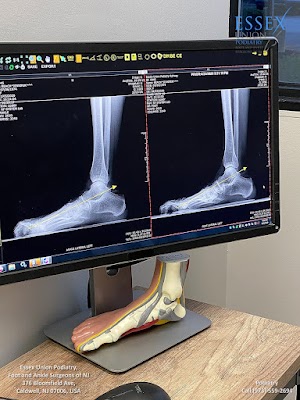
Advanced diagnostics are used when the exam points in several directions or when symptoms have not responded to initial care. Imaging and evaluation can include X rays to check for bone spurs, stress fractures, or joint degeneration, ultrasound for tendon pathology like micro tears or plantar fascia tears, and MRI for cartilage damage, soft tissue injuries, and scar tissue issues. In select cases, we use pressure mapping to see uneven weight distribution over the plantar surface, which helps with orthotic evaluation and custom insoles. These tools matter most for complex cases and when we are planning a personalized treatment plan.
Patterns that quietly change how you walk
As you collect details from hundreds of patients each year, familiar patterns emerge that drive walking abnormalities and foot discomfort in shoes. Here are five of the most common, and what typically sits underneath them.
- A short step and early toe off on one side, often after an ankle sprain that seemed minor. Underlying cause: residual ligament laxity, subtle peroneal tendon micro tears, and fear of full weight bearing that the body encodes as a protective limp. A foot and ankle surgeon for ankle instability can often restore stability with targeted rehab, bracing, or surgical tightening if needed. A flat foot collapse during midstance that makes knees angle inward and hips rotate. Underlying cause: flat arches or collapsing arches, posterior tibial tendon dysfunction, or long standing weight related foot issues. Custom insoles and, when appropriate, corrective osteotomies can restore the arch lever. A stiff ankle that blocks the tibia from gliding forward, which shows up as heel lift and foot turned out. Underlying cause: old ankle fracture with joint spurs, chronic synovitis, or tight calves and Achilles tightness. Treating it ranges from aggressive calf flexibility work to arthroscopy for bone spurs and scar tissue. Forefoot overload and metatarsal soreness by evening, especially in those who stand all day. Underlying cause: reduced ankle dorsiflexion, high arches that do not absorb shock, or shoe wear that is past its lifespan. Solutions include rocker bottom shoes, targeted padding, and addressing ankle flexibility issues. Intermittent numbness and tingling along the inside of the foot with prolonged walking. Underlying cause: nerve compression at the tarsal tunnel, sometimes worsened by swelling in the foot or orthotic edges that impinge. Decompression and careful orthotic modification can make a dramatic difference.
None of these patterns exist in isolation. You can have a runner with high arches who also has ankle misalignment from an old injury, or an older adult with foot arthritis who has learned to turn the foot out to avoid pain, creating a secondary knee problem. Connecting those dots is the job.
Building a plan you can live with
Treatment should fit your life and the biology of your condition. A foot and ankle surgeon for personalized treatment plans will usually start with the least invasive measures that still have a strong chance to work. For many, that means a phase of activity modification, shoe education, targeted physical therapy, and orthotic evaluation. We adjust training loads to avoid repetitive strain from overuse injuries and teach cross training options that maintain fitness without feeding the injury. For an athlete, that could be deep water running or cycling while a stress fracture heals. For a nurse with standing all day pain, it might be scheduled micro breaks, a mat at the workstation, and shoes with a stable heel counter.
Custom insoles can offload pressure points and change the way the foot accepts load. Good ones are not just a generic arch bump, they are built after watching you walk and often after reviewing pressure data. For flat arches, we support the midfoot and control the forefoot twist. For high arches, we focus on shock absorption and lateral stability. Not everyone needs a custom device. Some do best with in-shoe padding, taping, or a firm, well made over the counter insert. The goal is foot posture correction that brings the chain back toward center.
Inflammation needs attention. We use a mix of ice, elevation, compression, and when appropriate, short courses of anti inflammatory medication. Injections of corticosteroid have a role for specific conditions like plantar fasciitis, but we weigh those against the risk of soft tissue weakening. For tendons, biologic options and shockwave can help in select cases, especially in chronic Achilles tightness or partial tendon ruptures that will not fully settle. None of these are one size fits all. A foot and ankle surgeon for soft tissue injuries decides based on tissue quality, timing, and your goals.
Surgery belongs on the table when structure blocks function or when tissue is torn, unstable, or worn beyond what conservative care can reasonably fix. Tight ankles from bone spurs respond to arthroscopy. Ligament tears that lead to chronic ankle weakness may need reconstruction. Tendon ruptures require timely repair. Cartilage damage can be treated with microfracture or grafting in certain zones. Severe joint degeneration often forces a choice between joint preserving realignment and fusion. For ankle arthritis, replacing the joint can restore motion, but it has maintenance demands and activity limits. Fusion relieves pain and provides stability, but it sacrifices motion. The right pick depends on age, bone quality, alignment, and what you ask of your ankle every day.
Four patients, four paths
A mid distance runner in her 30s came in for ankle pain when running that had lingered for eight months. She rolled the ankle on a trail, rested for two weeks, then returned to training. Her MRI showed partial tears in the anterior talofibular ligament and peroneal micro tears. On gait analysis she offloaded the ankle early, leading to a short step. We built a plan around peroneal strengthening, balance work, and a lace up brace for trail days. She shifted to cycling for six weeks and progressed back to running with a return to full trail volume by week 12. A year later, she logs 30 to 40 miles per week with no instability.
A nurse in her 50s, on her feet for 10 hour shifts, described foot pain when standing and foot stiffness in the morning. By lunch she felt chronic heel pain and foot fatigue. Imaging showed a thickened plantar fascia with small plantar fascia tears and a heel spur. She did best with a stable shoe, a custom insole with heel support, calf stretching, and two sessions of shockwave. We also coordinated with her workplace to add anti fatigue mats. Pain dropped from an eight to a three within six weeks and she avoided injections. Her case shows how a foot and ankle surgeon for occupational foot stress has to look beyond the foot.

A retired contractor in his 70s had ankle arthritis pain and swelling that kept him from walking two blocks without stopping. He also reported clicking and occasional ankle locking. X rays and CT showed joint degeneration with osteophytes, and exam found reduced range of motion with guarding. He wanted to walk his dog twice daily and keep gardening. We discussed steroid injections, bracing, arthroscopy, and the larger options of fusion versus replacement. He chose arthroscopic debridement to remove impinging spurs as a step that might buy time. Five months later he walked a mile without stopping, pain dropped to a four, and he plans for a future fusion if pain returns. Trade offs were on the table the whole way.
A teen soccer player with sudden ankle pain after a growth spurt presented with pain at night and on stairs. MRI revealed a stress fracture along the distal fibula and early signs of tarsal coalition, one of those rare foot conditions that can surface in adolescence. We paused impact, placed him in a boot for four weeks, and corrected foot alignment issues with a custom insole. He returned gradually over three months and avoided surgery. Sometimes the right answer for teens sports injuries is simply to respect biology and time the growth plate needs.
Conditions that often hide behind a limp
Nerve problems change how we move in subtle ways. A foot and ankle surgeon for nerve issues looks for tarsal tunnel syndrome, where the tibial nerve is compressed at the inside of the ankle. People describe pins and needles, burning foot pain, and numbness and tingling made worse by prolonged standing or running. Exam shows a tender spot behind the medial malleolus and a positive Tinel’s sign. Orthotic edges that press in the wrong area can aggravate it. Early decompression and nerve gliding work well in many, and surgery is reserved for persistent, well documented compression.
Ligament injuries range from micro tears that never heal correctly to full ruptures. Unrepaired, they create ankle misalignment and instability when walking that leads to recurring injuries. Over years, this instability hastens joint degeneration. A structured rehab program helps most people, but when the ankle keeps “giving way,” a surgeon can restore tension and correct the tilt that drives wear.
Tendon injuries, like Achilles tightness and insertional pain, derail the final push off. That changes gait so the foot rolls out and the knee rotates. Plantar fascia tears, often a result of chronic strain, create heel pain that alters first step loading and encourages limping. These can respond to diligent flexibility work, heel lifts, eccentric strengthening, and time. A foot and ankle surgeon for overuse injuries will adjust loading rates and show you how to progress without sliding back.
Cartilage damage and bone spurs in the ankle block motion. People describe a hard stop at the same angle every time, with sharp ankle pain at end range. Arthroscopy can remove loose bodies and smooth spurs. For cartilage loss, the discussion shifts to resurfacing techniques or eventually to fusion or replacement. Each option trades motion, durability, and revision risk differently. That choice is never generic.
Stress fractures, especially in the metatarsals and fibula, show up as pain after exercise that slowly creeps earlier in the day. A foot and ankle surgeon for running injuries and hiking injuries sees these often after mileage bumps or terrain changes. I treat them with protected weight bearing for 4 to 6 weeks, then progressive loading while tracking pain scores. For non healing injuries, we check vitamin D, look for uneven weight distribution, and consider bone stimulators or surgical fixation if the site is high risk.
When surgery is right, and what it actually means
People often picture surgery as a last resort, a single event that flips a switch. In practice, it is one part of an arc that includes prehab, precise technique, and thoughtful rehab. For ankle instability, surgery might mean an anatomic repair of the ATFL and CFL with augmentation. For flatfoot from posterior tibial tendon dysfunction, it can mean tendon transfer combined with calcaneal osteotomy to realign the heel. For rigid hallux valgus with toe deformities that stop normal push off, a first ray correction restores the lever arm. For advanced ankle arthritis, total ankle replacement preserves motion, but it needs good bone quality and realistic activity limits. Fusion removes pain and provides a stable base for walking, but nearby joints take more load over time.
A foot and ankle surgeon for complex cases will talk through edge scenarios. What if you have diabetes with neuropathy and a history of swelling in the foot? What if you are an athlete trying to return to cutting sports? What if a previous operation failed and you need a second opinion to map out salvage options? We measure risks, outline contingencies, and build the plan around your priorities.
Rehab, milestones, and how to stack the odds
Walking abnormalities improve on a predictable timeline when rehab is planned and consistent. Early after injury or surgery, swelling control and gentle motion protect tissue without letting it stiffen. By week 4 to 6 in many protocols, we add more active motion and begin targeted strengthening. Gait retraining starts as soon as it is safe to load the limb. Small cues like quiet footfall, a straighter push off, and balanced step lengths matter. People who lean into the process often cut their recovery time by 10 to 20 percent compared to those who drift in and out of therapy.
Here is a short checklist I give patients who want the best chance at smooth recovery.
- Learn your weight bearing status and obey it, partial loading done wrong sets you back more than a week of missed steps. Ice and elevate on a schedule the first two weeks, 15 to 20 minutes per session, two to three times daily. Rehearse your gait cues in front of a mirror for two minutes a day, short focused sessions beat one long, sloppy walk. Track your symptoms in a notebook, pain at night, morning stiffness, or swelling after a new activity usually signals what to back off. Replace worn shoes at 300 to 500 miles of use, and check insoles for compression lines that show where you overload.
Persistent swelling, reduced range of motion, and foot fatigue are common speed bumps. They do not mean failure. We look for scar tissue issues that block gliding, adjust the plan, and sometimes add manual therapy or a short anti inflammatory taper. If numbness and tingling pop up as you increase activity, we reassess for nerve compression or orthotic edges that need trimming. Your body tells you what it likes and what it does not, but only if you watch carefully.
Keeping the gains: long term strategies that work
Long term foot health is not just about pain relief today. The best plans are simple, sustainable, and baked into daily life. A foot and ankle surgeon for preventative care will teach lunges that target ankle mobility without stressing healing tissue, single leg balance drills to retrain proprioception, and calf work that targets both the soleus and gastrocnemius. For weight related foot issues, even a 5 to 10 percent body weight change lowers peak plantar pressures and reduces daily activity pain. Occupational tweaks, like rotating tasks, using a stool for seated breaks, and stable shoes with a firm heel, help those with workplace injuries or who stand all day.
Shoes matter more than most people think. If you have high arches, seek cushioning with lateral stability and a gentle rocker sole to smooth motion. For flat arches, look for medial support and a torsion resistant midsole. If you have ankle arthritis pain, a rocker bottom helps, and for forefoot problems, a stiffer forefoot reduces painful bend. People often ask for foot and ankle surgeon NJ one brand, one model. The better answer is objective fit and function measured against your foot biomechanics.
Orthotics are tools, not forever prescriptions. A foot and ankle surgeon for orthotic evaluation will sometimes wean support as strength and alignment improve. Other times, lifelong support prevents relapse, especially in advanced deformity or ligamentous laxity. Custom insoles shine in feet with asymmetry, bony prominences, or complex deformities. For many active adults, a quality over the counter device does the job and spares the wallet.
When you should not wait
Some red flags deserve prompt evaluation. Sudden ankle pain with a popping sound, immediate swelling, and inability to bear weight suggests a significant sprain or fracture. Burning foot pain with progressive numbness and weakness points toward nerve compression that, left alone, can lead to lasting deficits. Foot pain when walking barefoot that localizes to a specific bone after a training spike often signals a stress fracture. Persistent swelling that does not fade overnight suggests ongoing joint inflammation or a non healing injury. In each of these, a foot and ankle surgeon for advanced diagnostics can narrow the list quickly and begin appropriate care.
The value of a second pair of eyes
Not every recovery goes to plan. I see patients after failed foot surgery, after well meaning rest that never fixed the root cause, and after months of chasing symptoms without a diagnosis. A foot and ankle surgeon for second opinion reviews your history, imaging, and exam with fresh eyes. Sometimes the fix is as simple as addressing ankle misalignment that keeps jamming one cartilage surface. Other times, the path means staged procedures or accepting a trade off to regain function. Complex cases reward patience and clarity.
Bringing your goals to the forefront
Your goals define success. A grandmother who wants to walk three miles with her granddaughter has different benchmarks than a sprinter or a factory worker who stands on concrete for 12 hours. A foot and ankle surgeon for elderly patients focuses on balance issues, safe strength, and fall risk. A foot and ankle surgeon for athletes weighs return to play timing against reinjury risk, and sets criteria based on force plate data or hop testing when available. A foot and ankle surgeon for children foot issues pays attention to growth plates and the natural evolution of arch shape. There is no one template.
Correcting walking abnormalities is less about perfect steps and more about resilient patterns. You deserve a plan that fits your feet and your life, backed by careful imaging and evaluation, a clear diagnosis, and a staged approach that starts with what is most likely to help. Whether you are dealing with chronic pain, unexplained foot pain, ankle pain on stairs, or the slow grind of joint pain in the foot, do not settle for adapting your life around the limp. With the right guidance, many people move from guarding each step to trusting their feet again.